三生三世十里桃花
China reports 522,000 new COVID-19 cases, one death in July amid fluctuating upward trend_我的网站

A |

China reported 522,000 newly confirmed COVID-19 cases in July, including 487 severe cases and one related death with cases showing a fluctuating upward trend, China's national disease control authority said.
The current uptick in infections represents another regular cyclical wave, with its severity comparable to surges seen in the past two years. The upward growth curve has slowed markedly, and the country is now on the plateau phase of this epidemic peak, said the Chinese Center for Disease Control and Prevention (Chinese CDC) on Thursday.
All tested infection samples were confirmed to be the Omicron variant, with the NB.1.8.1 strain and its sublineages accounting for the majority of circulating cases, the Chinese CDC said.
A Beijing-based respiratory disease specialist told the Global Times that waning population immunity, continued virus mutations that weaken existing antibody protection, and increased summer travel have contributed to the recent modest rise in infections. However, there is no evidence that the virus has become more pathogenic. Nationwide infections appear to be nearing their peak and case numbers may begin falling in late August.
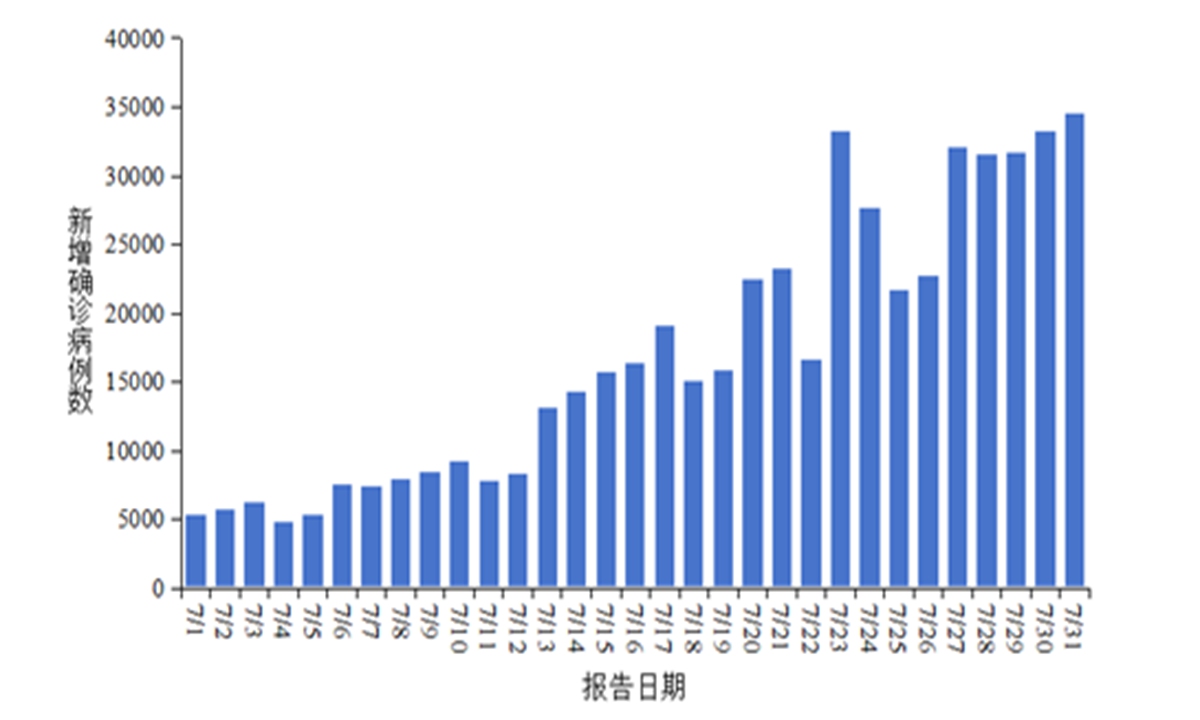
According to sentinel hospital surveillance data, from June 29-July 5 to July 27-August 2, the proportion of influenza-like illness among all outpatient and emergency visits at China's 1,041 COVID-19 and influenza sentinel hospitals edged up with slight fluctuations, standing at 4.3 percent, 4.4 percent, 4.5 percent, 4.4 percent and 4.5 percent, respectively.
During the same period, the COVID-19 positivity rate among patients with influenza-like illness in outpatient and emergency departments rose for consecutive weeks.
Several factors drove the fluctuating rise in COVID-19 cases in July. Population immunity has waned, as more than six months have passed since the last major wave of infections for most people, while continued SARS-CoV-2 mutations have reduced the protection provided by existing antibodies, Li Tongzeng, a respiratory disease medic from Beijing You An Hospital to the Capital Medical University, told the Global Times on Friday.
These factors, combined with increased travel and population mobility during the summer vacation, contributed to the recent small-scale surge. Based on patterns observed in recent years, COVID-19 infections tend to rise every six to eight months as population immunity declines, said Li.
The expert noted that while the virus continues to mutate, there is no evidence that it has become more pathogenic. Clinical data show that most patients develop only mild symptoms, with very few progressing to pneumonia or requiring hospitalization.
The Chinese CDC noted on Thursday that since COVID-19 was reclassified as a Category B infectious disease under Category B management, it has evolved into a prevalent, recurring respiratory infectious disease in China, with one to two epidemic fluctuations occurring nationwide each year.
Li also noted that residual immunity from previous infections also helps reduce disease severity, with most reinfections presenting as mild upper respiratory symptoms that resolve within about a week. The single COVID-related death reported nationwide in July further indicates that the current fatality rate remains very low.
Judging from historical epidemic patterns and current case growth trajectories, national infection figures may begin to decline in late August. Nationwide case numbers are now nearly at their peak, with declines already observed in some regions, said Li.
The Chinese CDC also said on Thursday that surveillance had not detected any variants posing major public health risks, nor had the current wave caused notable disruptions to the healthcare system.
The public is advised to take appropriate protective measures, including wearing masks when necessary, maintaining good personal hygiene, adopting healthy lifestyles and getting vaccinated as recommended.
。
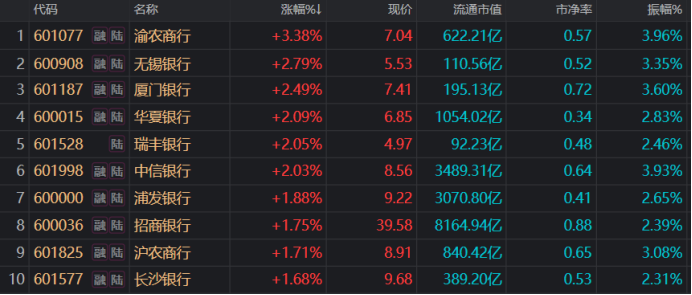 注:银行股集体活跃(截至8月24日收盘) 中信银行涨幅领跑,板块融资余额回落 近1周以来,银行板块热度攀升,中证银行指数近5个交易日累计上涨近3.91%,大幅跑赢沪指(-2.53%)、创业板指(-8.24%)及科创50(-10.43%)同期表现。个股层面来看,中信银行、渝农商行、农业银行、宁波银行近5日表现突出,涨幅分别达11.31%、7.65%、6.19%、5.31%。
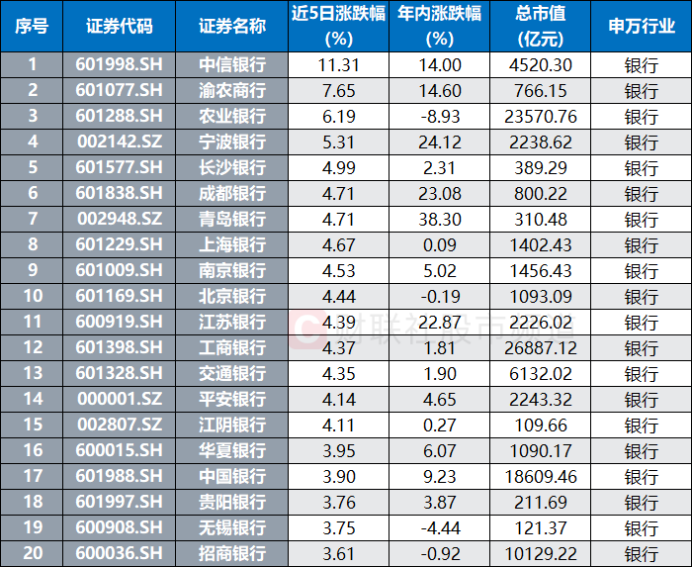 注:近5日涨幅居前的银行股(截至8月24日收盘) 在近日活跃的银行股中,中信银行、江苏银行今日盘中双双创下历史新高,成为板块内人气较高的标的,涨幅分别为2.03%和1.59%。量能方面,中信银行全天成交额达8.06亿元,创近2个月新高,并位列年内成交额第9高纪录;江苏银行成交额13.58亿元,处于年内前23%分位,同样维持较高的交投热度。 从资金面来看,银行板块近期融资余额有所回落。截至8月21日数据,其目前融资余额达693.95亿元,再度回落至8月初时录得的年内低点(692.45亿元)附近,两者相差近1.50亿元。其中,招商银行唯一近5日融资净卖额超1亿元,工商银行、中国银行等也遭部分减持,而郑州银行、苏州银行、重庆银行等获加仓。
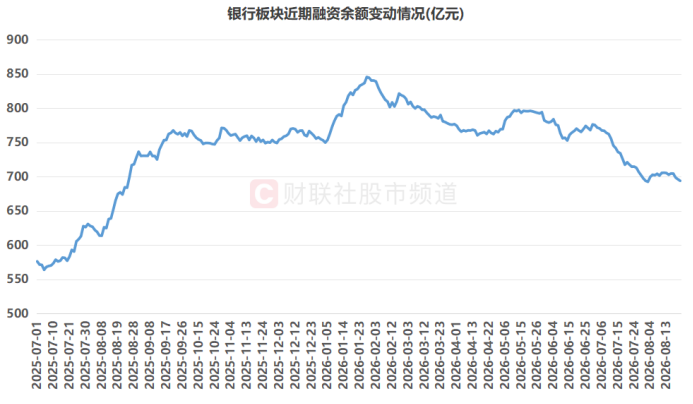 注:银行板块近期融资余额变动情况(截至8月21日数据) 相关ETF动向盘点,市净率排行榜扫描 从银行系ETF动向来看,截至8月21日,13只相关ETF近5个交易日份额表现分化。其中,规模最大且唯一超百亿的银行ETF华宝份额增长近3.37%;而位居第二至第四的3只ETF——银行ETF天弘、银行ETF易方达、银行ETF南方近日的份额则均出现缩水,平均降幅为0.68%。
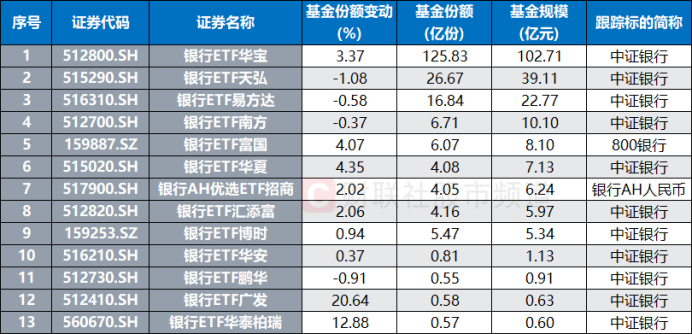 注:银行系ETF近5日份额变动情况(截至8月21日数据) 估值层面,截至最新数据,中证银行指数市盈率为7.16倍,处于近十年87.59%的分位水平;市净率0.69倍,位于近十年45.63%分位。股息率方面,其当前为4.21%,处于近十年35.99%分位。回顾近十年股息率走势,历史最高纪录出现在2024年7月17日,达7.9%;最低值则为2017年7月11日的1.70%。 目前,42只银行股仍均为破净状态。其中,宁波银行、成都银行、招商银行3股市净率居前,分别达0.92倍、0.91倍、0.90倍,杭州银行、农业银行、青岛银行、江苏银行、齐鲁银行、建设银行当前市净率也均超0.8倍。而民生银行、贵阳银行、华夏银行、郑州银行、光大银行等目前市净率较低。
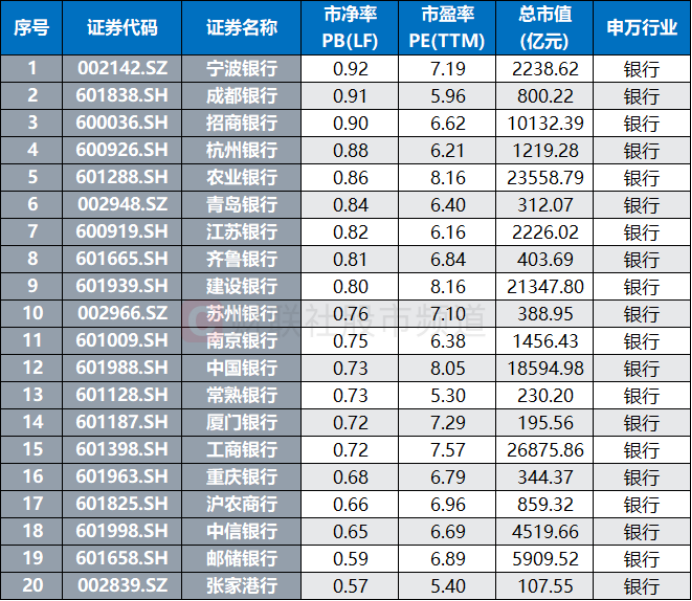 注:市净率居前的银行股(截至8月24日收盘)
 (文章来源:财联社)。
Current article:http://ek8a.foucaorengtunzhuaikuowang.cyou/ldeaq/c60r.html
Published on:09:12:23


